Lens Classification and Imaging Principles
The lens is the core component of optical devices such as cameras, microscopes, and telescopes. Understanding the classification of lenses and their imaging principles is essential not only for grasping the laws of physical optics but also for improving skills in photography and optical engineering.
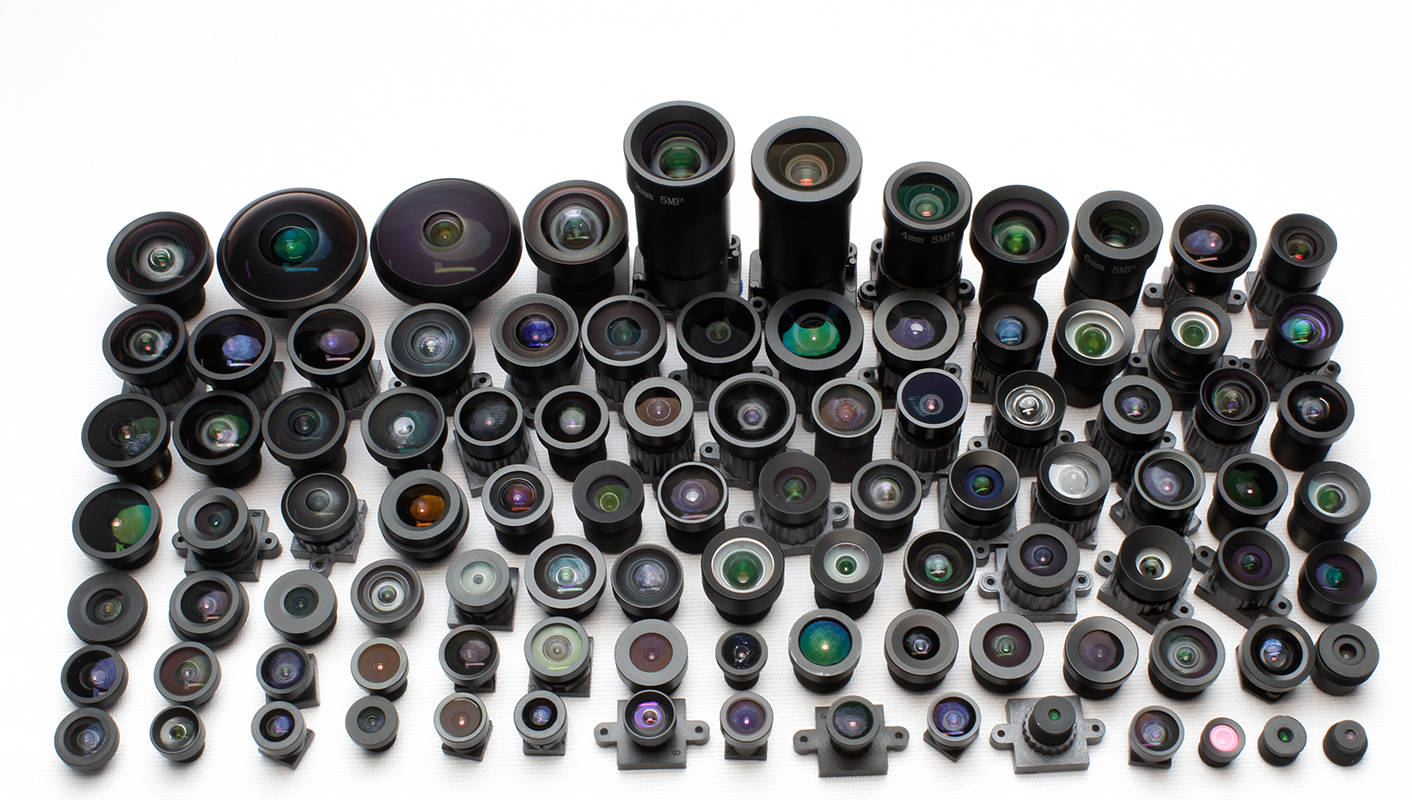
II. Classification of Lenses
Lenses are typically categorized by their shape and optical behavior (Lens Elements), while complete photographic optical systems are categorized by their function and focal length (Camera Lenses).
1. Classification by Shape and Optical Behavior
The most fundamental classification is based on the curvature of the element and how it refracts light:
Convex Lens (Converging Lens):
Characteristics: Thicker in the center and thinner at the edges.
Function: Converges light. When parallel light rays pass through a convex lens, they are refracted towards the central axis and converge at a single point (the focal point).
Application: It is the primary element for imaging, used to form a real image.
Concave Lens (Diverging Lens):
Characteristics: Thinner in the center and thicker at the edges.
Function: Diverges light. Parallel rays spreading out after passing through; their backward extensions converge at a virtual focal point.
Application: Often combined with convex lenses to correct optical aberrations (such as chromatic and spherical aberrations) or to expand the field of view.
Aspherical Lens:
Characteristics: The surface profile is not part of a sphere or cylinder.
Function: Corrects spherical aberration, a defect where light rays do not perfectly converge at a single point, causing blurriness at the edges of the image. It significantly reduces the number of elements needed and the overall weight of the lens.
2. Classification by Photographic Function and Focal Length
In photography, a lens usually consists of multiple elements combined together. They are classified by focal length and usage:
Prime Lens: Has a fixed focal length. They typically offer wider apertures and sharper image quality.
Zoom Lens: Has a variable focal length. The magnification changes by adjusting the distance between internal elements.
Wide-angle Lens: Short focal length, wide field of view. Ideal for landscape photography.
Telephoto Lens: Long focal length, narrow field of view. Magnifies distant subjects, making it suitable for sports or wildlife photography.
III. Imaging Principles of a Lens
The core task of a lens is to focus light reflected from an object onto a photosensitive medium (such as film or an image sensor like CMOS/CCD) to form a clear image. The fundamental principle is based on the Refraction of Light.
Refraction and Convergence:
When light travels from air into a glass lens, the change in medium density alters the speed of light, causing the light path to bend (refract). A convex lens is designed so that all parallel incoming light rays converge at a single point on the optical axis after passing through the lens, known as the Focal Point.
Formation of a Real Image:
When an object is placed beyond the focal length of a convex lens, the light rays emitting from the object are refracted by the lens and converge on the opposite side to form an inverted Real Image. In a camera, this real image falls precisely on the sensor plane, where the sensor converts the light signals into digital data.
Focal Length:
Focal length is the distance from the optical center of the lens to the image plane (focal point) when the lens is focused at infinity.It determines the magnification and angle of view:
A longer focal length results in higher magnification and a narrower angle of view.
A shorter focal length results in lower magnification and a wider angle of view.
Aperture:
The aperture is an adjustable opening inside the lens, similar to the pupil of the human eye. It controls the amount of light passing through the lens and affects the Depth of Field—the distance range within the image that appears acceptably sharp.
IV. Conclusion
A camera lens is not a simple piece of glass but a complex optical system. Optical designers combine convex, concave, and aspherical elements to precisely control the path of light refraction, eliminate aberrations, and ultimately render a realistic and sharp image on the sensor.
 Consult now